20 De Wet, Bantry Bay: The October Construction Update
October 13, 2026
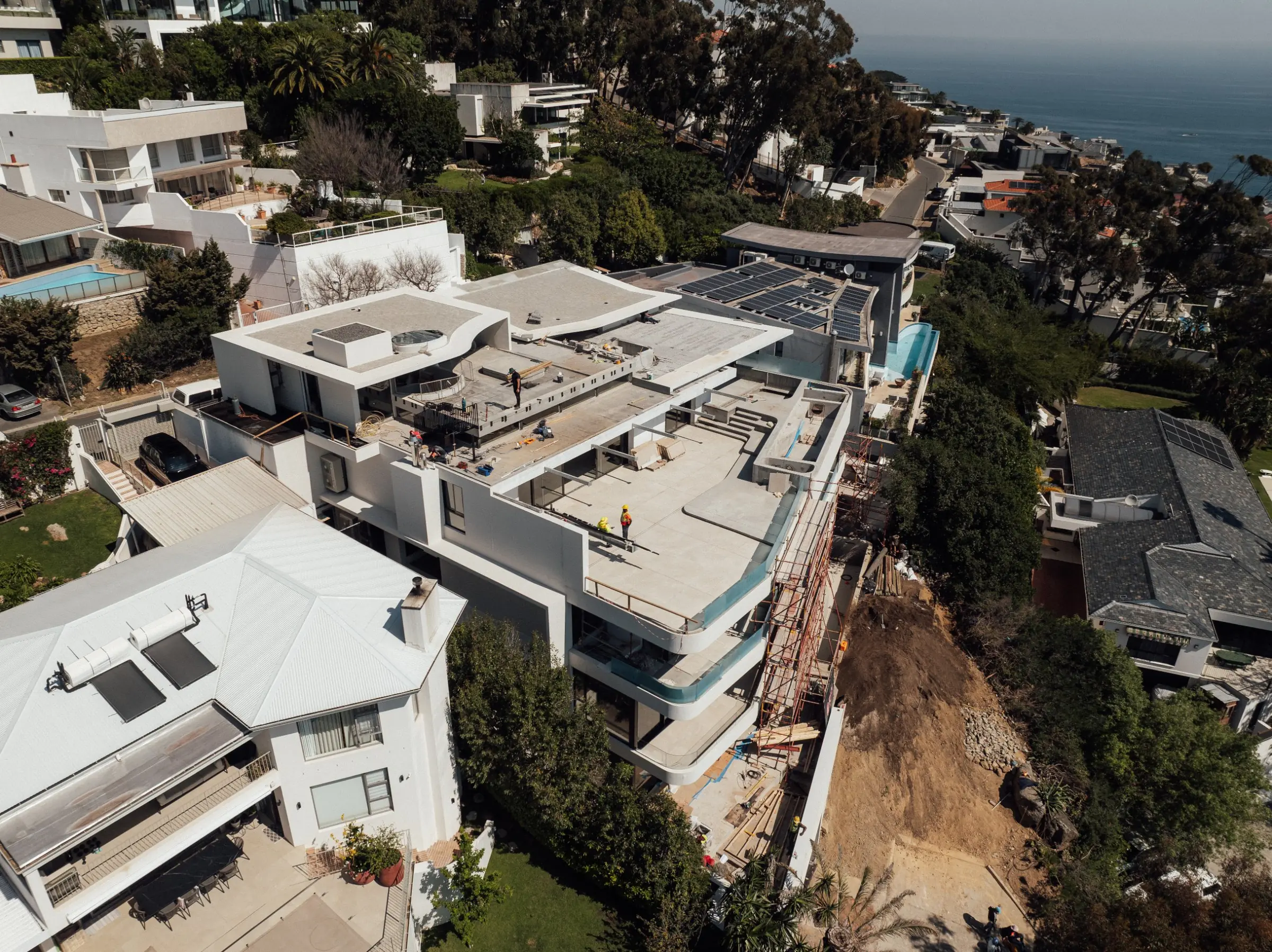
Facade works at 20 De Wet in Bantry Bay are nearing completion.
A building has two owners. The person who lives inside it, and everyone else, who will only ever see it from the outside. The second group never walks through the door. They never see the joinery, the stone, or the way a room holds afternoon light. For them, the building is its facade and nothing else, and that is their experience of it for as long as it stands.
In Bantry Bay this is literal. The suburb is built in tiers up the slope, so almost every residence here looks over the roof and the face of the one below it. A facade on the Atlantic Seaboard is rarely a flat elevation addressing a street. It is the view from somebody else's living room. An error in it is not yours alone to live with.
The facade carries an obligation that extends past the brief. The owner commissions it. The street inherits it.
It is also the stage at which the architecture either reads as it was drawn or it does not. Shadow lines, the depth of a reveal, the way a balcony edge turns a corner: these are set in millimetres and read from a hundred metres. A line that runs true reads as calm from the road below. A line that drifts reads as cheap, even to someone who could not tell you why.
With the facade closing out, the scaffolding comes down, and the building is seen for the first time as it will be seen permanently. Inside, snagging and furnishing continue at the same pace they have for weeks, and that work will not stop because the outside is finished.
Anyone acquiring a residence before it is complete asks three questions. Will it be built. Will it be built to the standard described. Will it be delivered as promised. At 20 De Wet, the answer to the first is now visible from the road.
The next update will follow from site.
